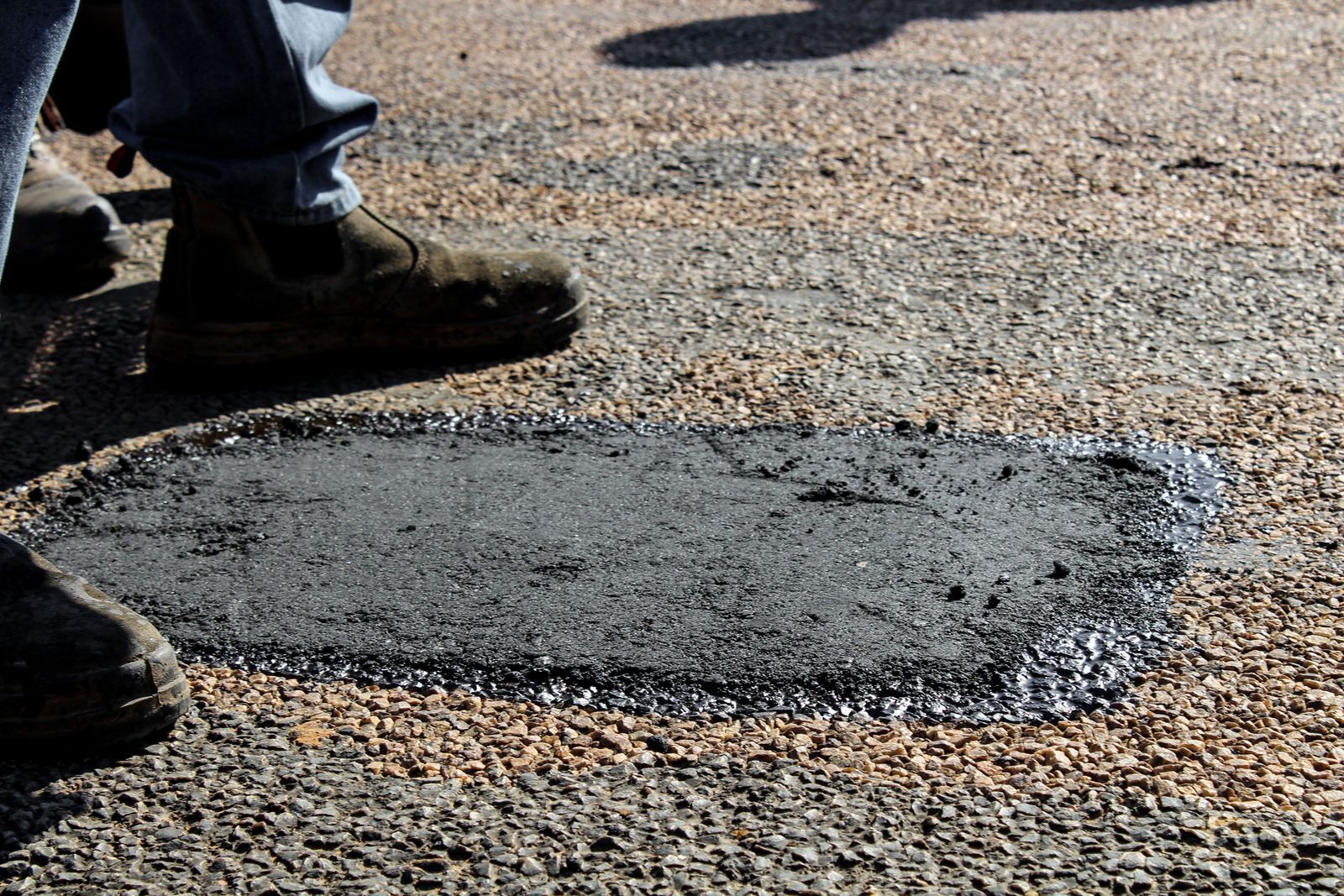
Potholes form when water gets into a road through cracks in the surface, softens the base underneath, and traffic then punches through the weakened layer. That is why they appear in large numbers during and after the rains. Heavy and overloaded lorries speed the process up, and so do blocked drains, thin surfacing and missed maintenance. A pothole that is properly repaired is cut back to a square, cleaned, dried, primed, filled in layers and compacted. A pothole that is simply filled with loose material will be back within weeks.
How does a pothole form?
It almost always follows the same steps:
- The surface cracks. This can be from age, heat, the bitumen hardening over time, or the base moving underneath.
- Rainwater runs into the cracks and reaches the base.
- The wet base loses strength. Gravel and crushed stone are strong when dry and much weaker when saturated.
- Each wheel that passes pumps water and fine material up through the cracks, leaving a void.
- The surface over the void breaks away, and the hole grows with every vehicle and every storm.
From the first crack to a deep hole can take a single rainy season on a busy road. That is why sealing cracks in the dry season is one of the cheapest things a road owner can do.
Why are there more potholes after the rains?
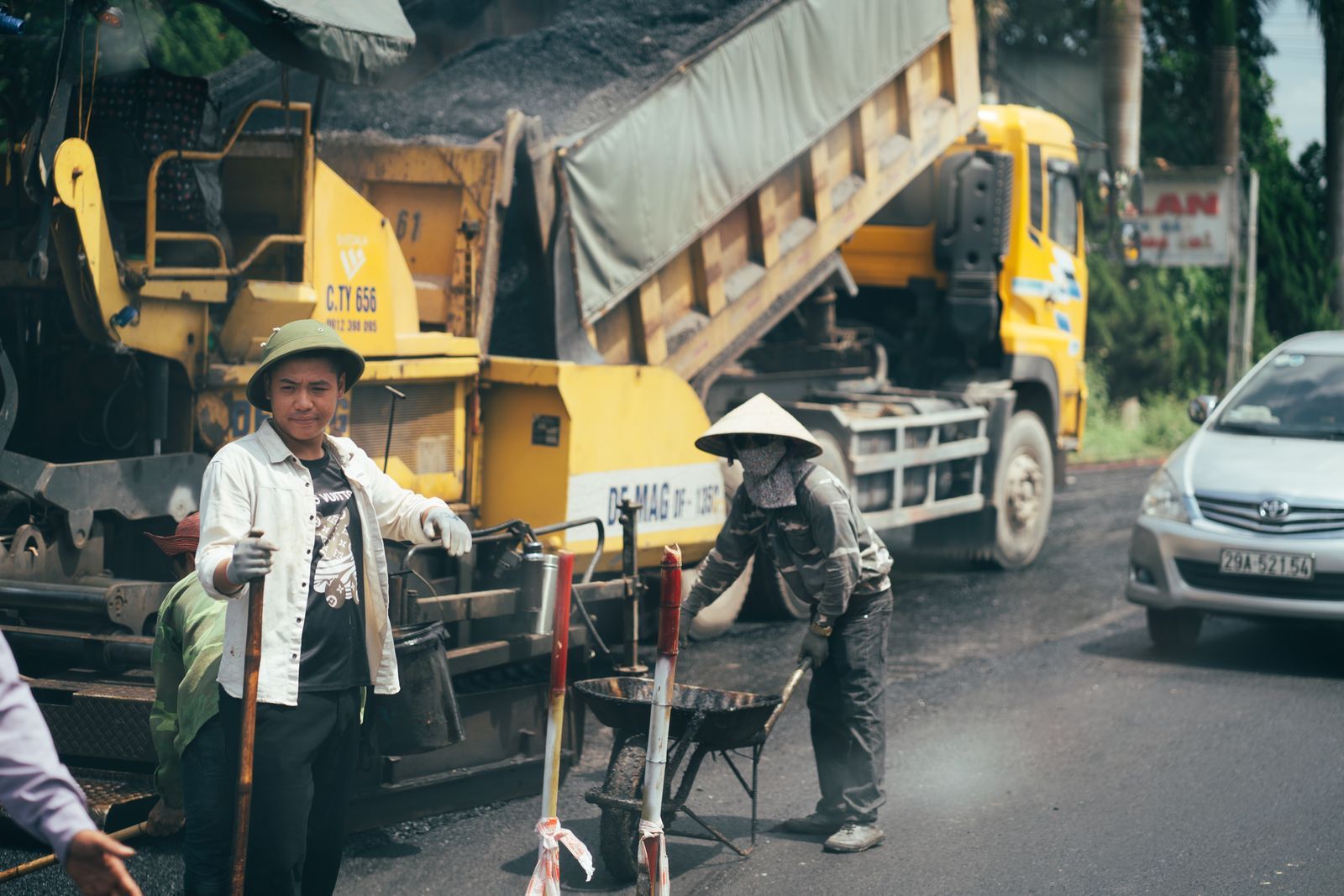
Water is the main cause. During the long and short rains, roads with blocked side drains or flat surfaces hold water for hours or days. That water soaks into any crack it finds. Add the extra traffic at the end of a dry season and the heavy lorries that use main routes all year, and the weak spots fail together.
In low-lying parts of Dar es Salaam, roads can sit under water for long periods during heavy rain. A road that is flooded for days will lose strength even if its surface was sound. Our guide to stormwater drainage covers the drainage side for private plots.
Do overloaded trucks cause potholes?
They make them much worse. Road damage rises very steeply with axle load: engineers use a rule of thumb called the fourth power law, under which an axle carrying twice the load does roughly sixteen times the damage. A single heavily overloaded lorry can do as much harm to a road as thousands of cars.
That is why axle load limits are enforced at weighbridges on Tanzania's main corridors. On private roads and estate roads, the same physics applies. If your site road was designed for cars and the odd delivery van, a season of loaded tipper trucks will wreck it.
What is the right way to repair a pothole?
A lasting repair follows these steps:
- Mark out a square or rectangle around the hole, extending into sound surfacing.
- Cut the edges vertically with a saw or jackhammer and remove all loose and wet material.
- Repair the base if it is wet or weak. Dig it out, replace it with good material and compact it.
- Clean and dry the hole. Water left in the bottom will undo the repair.
- Apply a tack coat of bitumen emulsion to the bottom and sides so the new material bonds.
- Fill in layers with hot asphalt or a quality cold mix, compacting each layer, and finish slightly above the road level so traffic beds it in.
- Seal the joint around the edge so water cannot find its way back in.
The quick alternative, throwing gravel or loose premix into a wet hole and letting cars flatten it, rarely lasts more than a few weeks. It also hides the damage underneath until the hole is bigger.
| Repair method | Typical life | When to use it |
|---|---|---|
| Throw-and-go fill | Days to weeks | Emergency only, to keep traffic moving |
| Cold mix, cut and compacted | Months to a few years | Small repairs, wet season |
| Hot mix, cut and compacted | Years, often as long as the road around it | Planned maintenance |
| Base repair plus hot mix | As long as the surrounding road | Holes caused by base failure |
How can potholes be prevented?
Most potholes are preventable with routine maintenance that costs a fraction of reconstruction:
- Clear side drains and culverts before each rainy season.
- Seal cracks in the dry season, before water can get in.
- Reseal surface-dressed roads on time, every several years.
- Keep road shoulders level with the surface so water runs off rather than along the edge.
- Control heavy vehicles on roads that were not designed for them.
Who repairs potholes on public roads?
Trunk and regional roads are maintained by TANROADS. District, urban and feeder roads are maintained by TARURA. Both are funded largely through the Roads Fund. If a public road near you is failing, the regional TANROADS office or the district TARURA office is the place to report it. Our guide to who builds roads in Tanzania explains who looks after which road.
Frequently asked questions
Why do potholes come back after they are fixed?
Usually because the repair did not remove the wet, weak material underneath, the edges were not cut square and sealed, or the hole was filled while wet. Water gets back in and the cycle starts again.
Can a pothole be repaired during the rainy season?
Temporarily, yes. Cold mix can be placed in damp conditions after the water is pumped out, but a permanent hot-mix repair is best done in dry weather.
Is concrete better than asphalt for pothole repair?
Not for an asphalt road. Concrete and asphalt move differently, and the joint between them often cracks. Use asphalt for asphalt roads and concrete for concrete roads.
Who pays for damage caused by potholes?
On public roads, the responsible agency may consider claims, but the process is slow and not guaranteed. On private roads the owner is responsible, which is another reason to maintain them well.
Is your site road breaking up?
Vika Construction inspects, repairs and rebuilds access roads, car parks and site drainage. See our civil works or contact us for a site visit.
Found this useful? Share it with someone who is building.