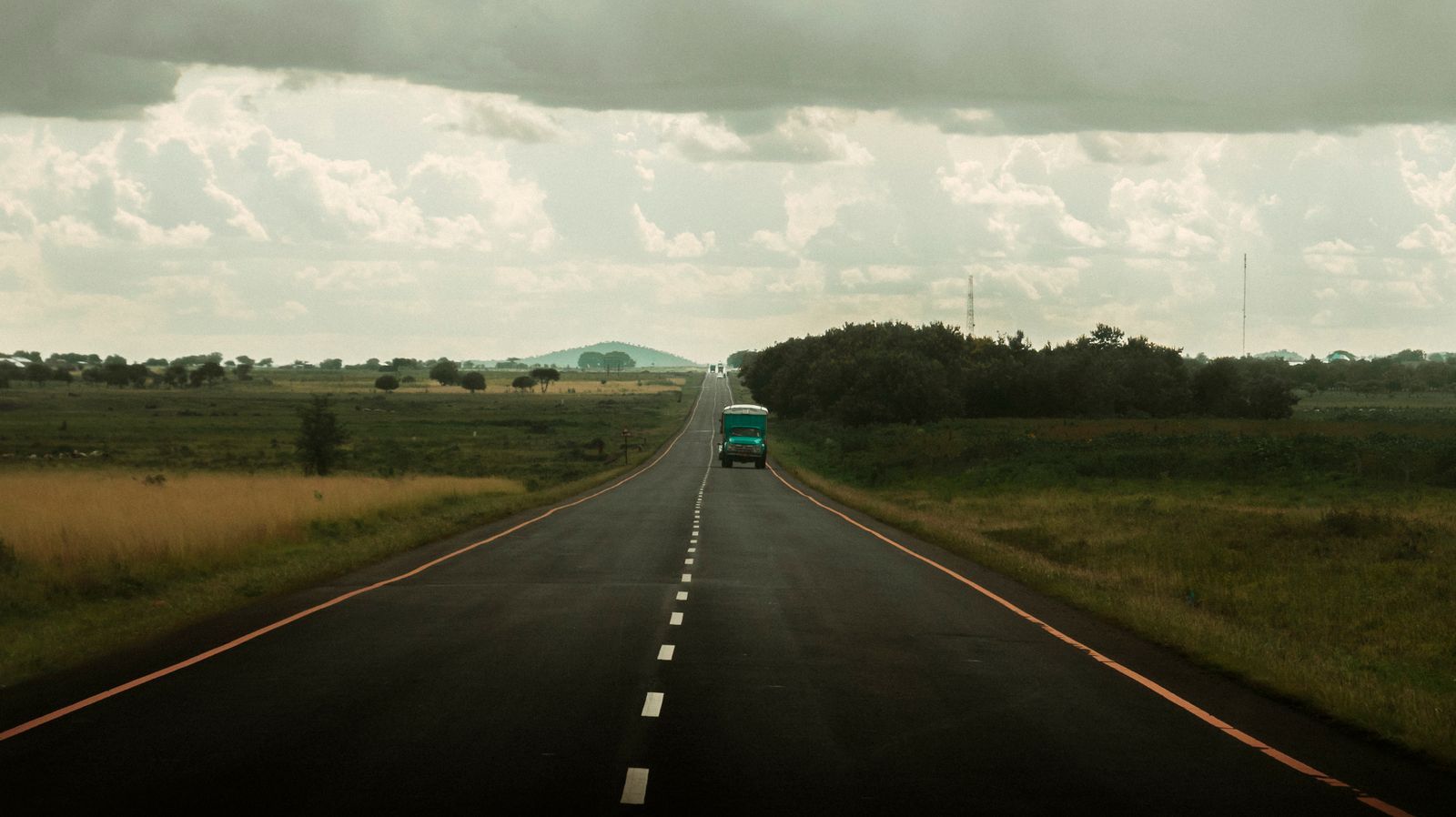
Tanzania's public roads are split between two agencies. TANROADS (Tanzania National Roads Agency) builds and maintains the national network of trunk and regional roads, roughly 37,000 km. TARURA (Tanzania Rural and Urban Roads Agency) looks after district, urban and feeder roads, about 144,000 km, most of it still gravel or earth. Both fall under government oversight, are funded largely through the Roads Fund, and hire private contractors registered with the Contractors Registration Board to do the actual construction. Roads inside a private plot or estate belong to the owner.
What roads does TANROADS manage?
TANROADS is responsible for the national road network:
- Trunk roads: the main routes between regions and to neighbouring countries, such as the corridors linking Dar es Salaam to the interior and the borders.
- Regional roads: roads connecting regional centres and district headquarters to the trunk network.
It also handles many major bridges and, in larger cities, some of the big urban arterial roads. Recent reporting puts the network at about 37,000 km. TANROADS has an office in each region, headed by a regional manager, which is where planning, maintenance and complaints for these roads are handled locally.
What roads does TARURA manage?
TARURA was set up in 2017 to take over local roads from district and municipal councils. Its network covers:
- District roads and feeder roads: the rural roads that connect villages, farms and markets to the main network.
- Urban roads: most streets inside towns and cities that are not national roads.
The TARURA network is far larger than the national one, about 144,000 km, and only a few thousand kilometres of it are paved. Each district and urban council area has a TARURA office with a district or town manager.
| TANROADS | TARURA | |
|---|---|---|
| Roads | Trunk and regional roads, major bridges | District, feeder and urban roads |
| Approximate length | About 37,000 km | About 144,000 km |
| Mostly | Paved trunk routes, gravel regional roads | Gravel and earth, some paved urban streets |
| Local office | Regional manager | District or town manager |
Lengths are approximate and change as roads are reclassified and added.
Who pays for roads?
Road maintenance is funded mainly through the Roads Fund, which collects money from a fuel levy and other road user charges and passes it to TANROADS and TARURA. New roads and big upgrades are often funded from the government development budget, sometimes with loans or grants from development partners. Toll roads and public-private partnerships are a smaller but growing part of the picture.
The practical result is that maintenance money is limited, and agencies have to prioritise. Busy routes and roads that are about to fail usually come first.
Who actually builds the roads?
The agencies plan, design (often with consulting engineers) and supervise. The construction itself is done by contractors who win tenders. Those contractors must be registered with the Contractors Registration Board in the civil works category, and the class of their registration limits the size of contract they can take. Our guide to CRB contractor classes explains how that works.
Big projects such as long highways, flyovers and bridges often go to large local or international firms. Smaller works, for example gravel road maintenance, drains and culverts in a district, are commonly done by local contractors in lower classes.
What is a road reserve, and why does it matter to plot owners?
Every public road has a road reserve: a strip of land on either side kept for the road, its drains, future widening and utilities. The width depends on the road class, and it is much wider for trunk roads than for local streets.
Building inside a road reserve is not allowed, and structures that encroach can be demolished without compensation when the road is widened. Before you buy or build next to a main road, check the reserve width with TANROADS or TARURA and confirm that your plot boundary is outside it. This is one of the checks in our guide to checking a land title.
Who do I contact about a damaged road?
- A main road between towns or regions: the TANROADS regional office.
- A street in town or a rural road: the TARURA district or town office.
- A road inside an estate or private development: the developer or the owners, since it is usually private.
- Blocked drains in your street: TARURA or the municipal council, depending on the drain.
Photos with the location, the date and a short description help the office act faster.
Can private owners build or repair a public road?
Not without permission. Work in a road reserve, including driveway culverts, access ramps and repairs, should be approved by the responsible agency. Communities and businesses sometimes fund repairs to a local road, but this should still be agreed with TARURA so the work meets their standards and does not create new problems with drainage.
Frequently asked questions
What is the difference between TANROADS and TARURA?
TANROADS manages the national network of trunk and regional roads. TARURA manages district, feeder and urban roads. TARURA's network is about four times longer, but most of it is unpaved.
When was TARURA established?
TARURA was established in 2017, taking over responsibility for local roads from the district and municipal councils.
How are Tanzanian roads funded?
Mainly through the Roads Fund (from fuel levies and road user charges) for maintenance, and the government development budget, often with development partner support, for new roads.
Can I build near a main road?
Yes, but outside the road reserve. Check the reserve width for that road with TANROADS or TARURA before buying or designing.
Need civil works near a public road?
Vika Construction carries out access roads, drainage and site works, and coordinates approvals with the road authorities. See our civil works or contact us.
Found this useful? Share it with someone who is building.