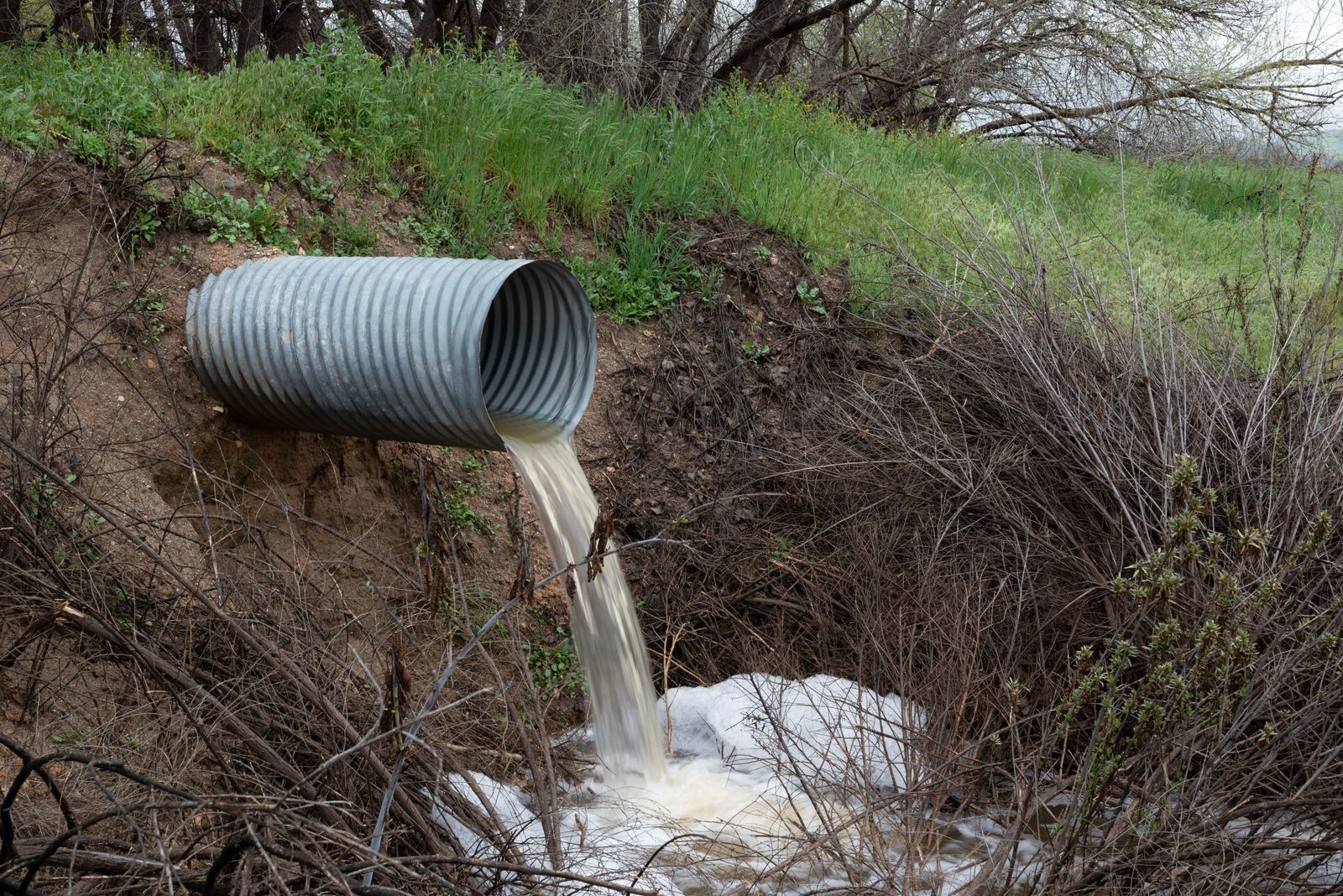
A culvert is a pipe or box that carries water under a road, driveway or embankment. Road drainage is the whole system that gets rain off the road and away from it: the camber that sheds water, the side drains that collect it, the mitre drains that lead it off into the land, and the culverts that let it cross. In Tanzania, most culvert failures come from three things: culverts that are too small for the storms they face, culverts that block with silt and rubbish, and outlets that are not protected, so the water scours the ground and undermines the road.
What does a road drainage system include?
| Part | What it does |
|---|---|
| Camber or crossfall | Sheds rain off the road surface quickly |
| Side drains | Collect water alongside the road |
| Mitre drains | Lead water from side drains away into the surrounding land, on rural roads |
| Catch-water drains | Intercept water running down a hillside before it reaches the road |
| Culverts | Carry water under the road where a drain or stream has to cross |
| Scour checks | Small barriers in steep drains that slow the water and stop erosion |
| Outlet protection | Stone pitching or concrete aprons that stop water eroding the ground at the outlet |
On paved urban roads, side drains are usually lined with concrete and connect to the city's stormwater system. On gravel roads, unlined drains are common and need more maintenance.
What types of culvert are there?
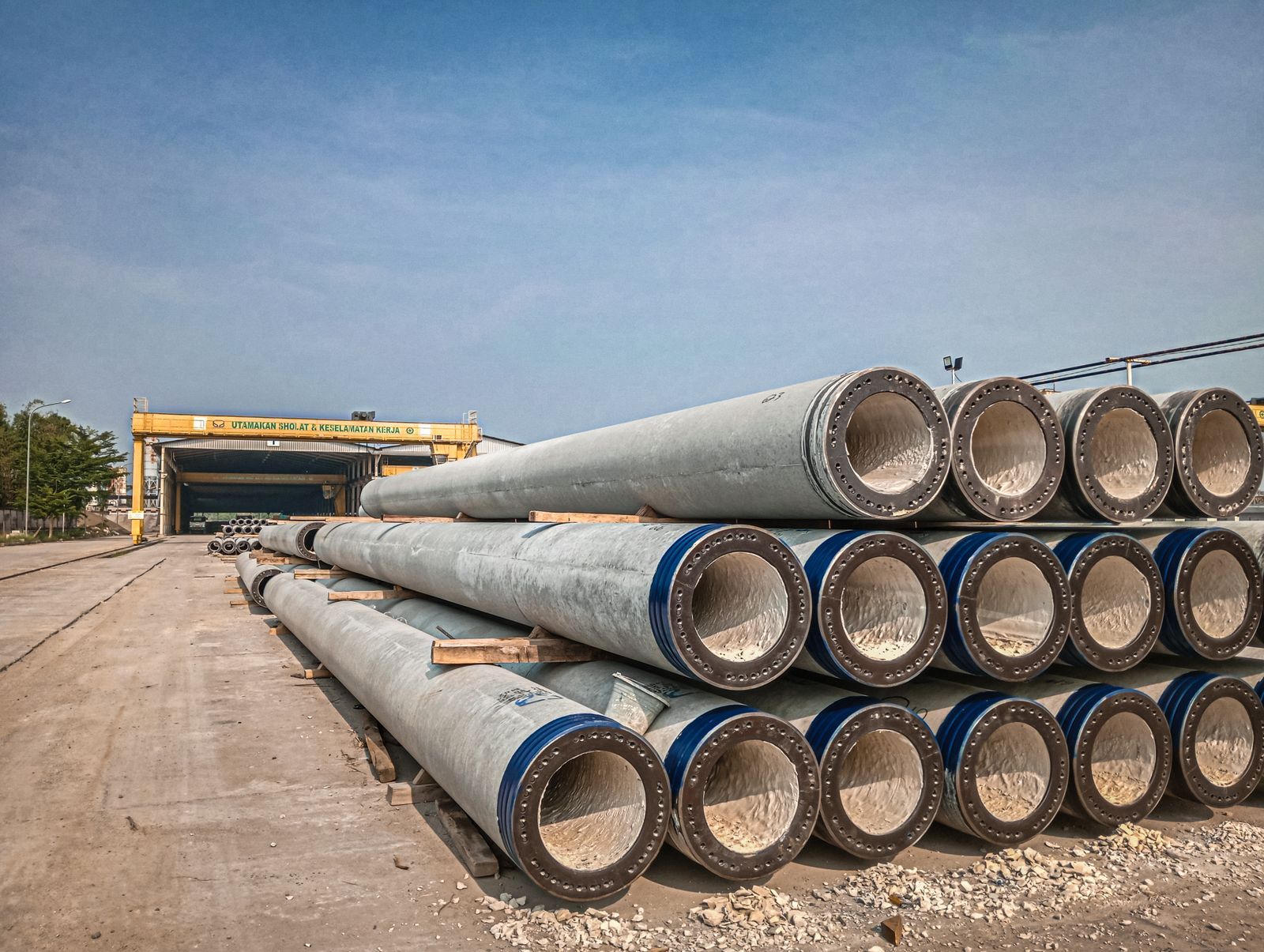
- Pipe culverts: precast concrete pipes, usually 600, 900 or 1,200 mm in diameter. The most common type on district roads and private driveways.
- Multiple pipe culverts: two or more pipes side by side where one is not enough.
- Box culverts: square or rectangular concrete boxes, cast on site or precast, for larger flows.
- Drifts and vented drifts: low crossings where water flows over the road in floods, used on rural roads for seasonal streams.
- Bridges: once the flow is too big for culverts.
How is a culvert sized?
An engineer works out how much water will reach the culvert in a heavy storm. That depends on the size of the catchment (the area of land draining to that point), how steep and built-up it is, and the rainfall intensity for a chosen return period, for example the storm expected once in 10 or 25 years. The culvert must pass that flow without the water rising over the road.
Rules of thumb used on small projects:
- Do not use pipes smaller than 600 mm under roads. Smaller pipes block easily and are almost impossible to clean. Many engineers prefer 900 mm as the minimum where silt is common.
- When in doubt, go bigger. The cost difference between a 600 mm and a 900 mm pipe is small compared with rebuilding a washed-out road.
- Built-up areas send far more water to drains than bush or farmland, because roofs and paving do not absorb rain. A culvert that coped ten years ago may be too small now that the area has filled with houses.
How is a pipe culvert installed?
- Excavate to the design level, with a gentle fall in the direction of flow, usually 1 to 3 per cent.
- Place a firm bed of compacted gravel or lean concrete so the pipes are fully supported.
- Lay the pipes with joints sealed, so soil does not wash in.
- Backfill both sides in thin compacted layers, keeping the levels even so the pipe is not pushed sideways.
- Provide enough cover over the pipe, typically at least 600 mm under a road, or protect it with a concrete surround where cover is shallow.
- Build headwalls and wingwalls at both ends to hold the fill and guide water in and out.
- Protect the inlet and outlet with stone pitching or a concrete apron.
Why do culverts fail?
| Failure | Cause | Prevention |
|---|---|---|
| Road overtopped in storms | Culvert too small, or blocked | Correct sizing, regular cleaning |
| Pipe cracked or crushed | Too little cover, poor bedding, heavy lorries | Proper bed, cover or concrete surround |
| Road washes out at the culvert | Water seeping along the outside of the pipe | Compacted backfill, headwalls, sealed joints |
| Big hole at the outlet | No outlet protection, water scours the ground | Stone pitching, aprons, energy dissipation |
| Culvert full of silt | Flat fall, no maintenance | Correct gradient, clean before each rainy season |
Most of these are cheap to prevent at the time of building and expensive to fix afterwards.
What does this mean for a private plot or estate?
If your driveway crosses a roadside drain, you need a culvert, not fill. Use at least a 600 mm pipe with headwalls, keep the invert level with the drain on both sides, and check with the road authority first. Inside an estate or compound, plan where the water from roofs and paving will go before you build boundary walls, because walls often trap water. Our guides to stormwater drainage for homes and protecting buildings from flooding cover the plot side.
Frequently asked questions
What size culvert do I need for a driveway?
For a typical driveway crossing a roadside drain, a 600 mm concrete pipe is the usual minimum, with 900 mm where the drain carries a lot of water or silt. An engineer can size it properly from the catchment.
How deep should a culvert be buried?
Under a road, the top of the pipe usually needs at least 600 mm of cover. With less cover, the pipe should be protected with a concrete surround.
What is the difference between a culvert and a bridge?
Size and structure. Culverts are closed pipes or boxes buried in fill. Bridges span the waterway with a deck on supports, and are used when the flow is too large for culverts.
Who maintains culverts on public roads?
TANROADS for trunk and regional roads, TARURA for district and urban roads. Clearing blocked culverts before the rains is part of their routine maintenance.
Drainage problems on your site?
Vika Construction designs and builds drains, culverts and site drainage for homes, estates and commercial sites. See our civil works or contact us for a site visit.
Found this useful? Share it with someone who is building.