A concrete grade such as C20 or C25 tells you its strength: the number is the minimum crushing strength in megapascals (N/mm²) that the concrete should reach 28 days after casting. The familiar site mixes are rough equivalents: 1:3:6 (cement, sand, aggregate) gives about C10 to C15 and is used for blinding; 1:2:4 gives about C20 and is the traditional mix for slabs and beams on small buildings; 1:1.5:3 gives about C25. For most reinforced concrete today, engineers specify C25 or higher. The amount of water matters as much as the ratio: too much water can cut the strength by a third or more.
What does C20 or C25 mean?
The "C" stands for concrete, and the number is the characteristic strength in N/mm² measured on test specimens at 28 days. Some specifications write it as C25/30, where the first number is the cylinder strength and the second the cube strength. In Tanzania, cube tests are the norm, so you will often see results quoted against the second number.
"Characteristic" means that no more than about 5 per cent of tests should fall below that figure. A C25 mix is therefore designed to average comfortably above 25.
What are the common concrete grades and their uses?
| Grade | Rough site mix (cement : sand : aggregate) | Approx. cement per m³ | Typical use |
|---|---|---|---|
| C10 to C15 | 1:3:6 | 4 to 5 bags (50 kg) | Blinding under foundations, mass fill |
| C20 | 1:2:4 | About 6.5 to 7 bags | Ground slabs, small house beams and columns (older practice) |
| C25 | 1:1.5:3 | About 8 bags | Reinforced slabs, beams, columns, foundations |
| C30 | Designed mix | About 8.5 to 9.5 bags | Storey buildings, heavier structures, water tanks |
| C35 and above | Designed mix, often ready-mix | 9.5 bags or more | Multi-storey frames, bridges, heavy industrial use |
Bag counts are approximate and depend on the cement type, the aggregate, and how the mix is batched. They are useful for budgeting, not for design.
The table explains a lot of arguments on site. A fundi saying "we always use 1:2:4" is describing a C20-type mix. If your structural drawings say C25, that is not the same thing.
Volume batching vs designed mixes: what is the difference?
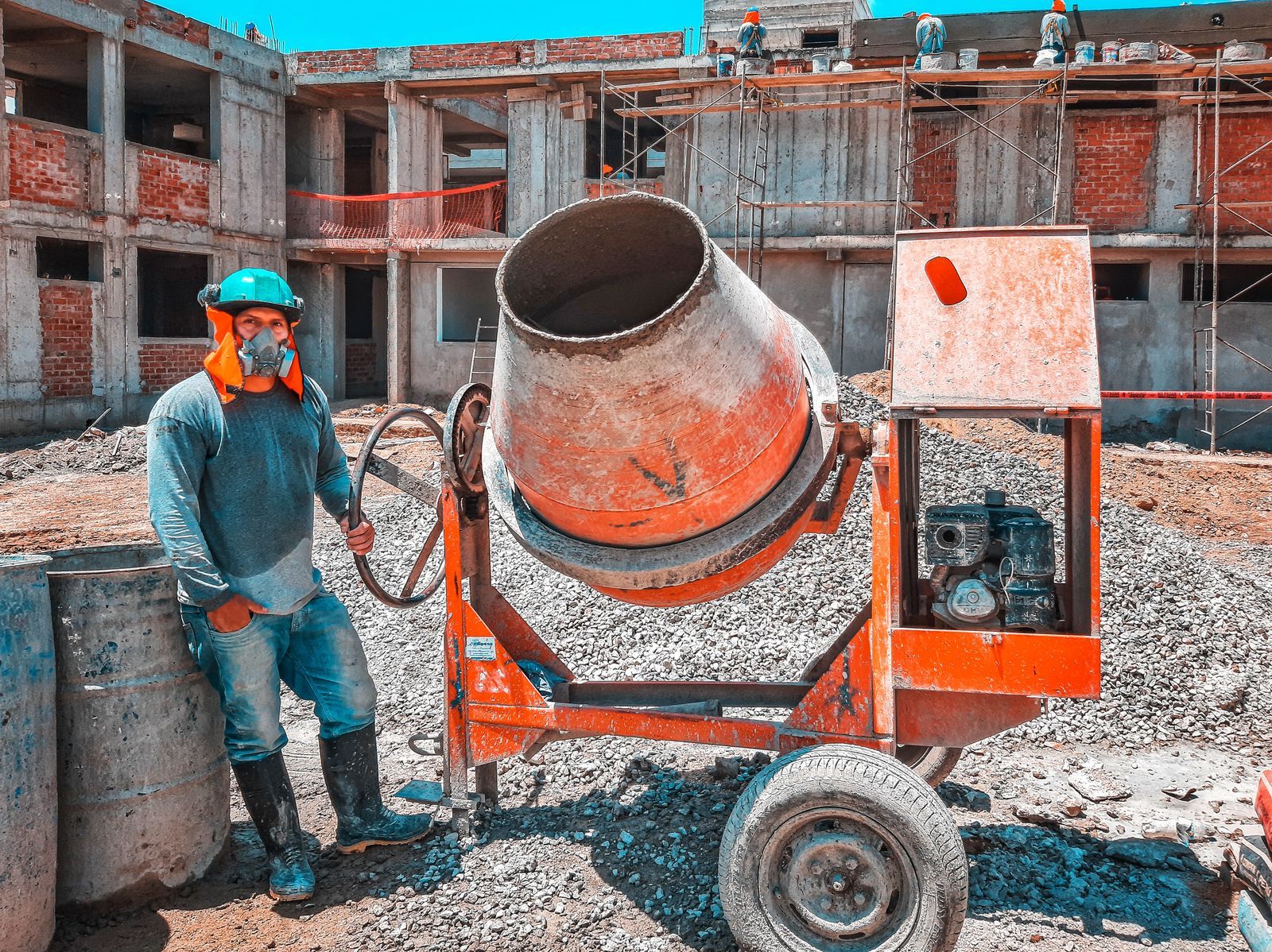
Ratios like 1:2:4 are nominal mixes, batched by volume using buckets or head pans. They are simple, but volume batching is not precise: damp sand bulks up, aggregate sizes vary, and one wheelbarrow is never quite the same as the next.
A designed mix is worked out by an engineer or a ready-mix supplier from tests on the actual materials, with quantities by weight and a set water-cement ratio. It costs a bit more to set up and gives far more predictable results. For storey buildings, water tanks and anything structural above a simple bungalow, a designed mix or ready-mix concrete is the safer choice.
Why does water matter so much?
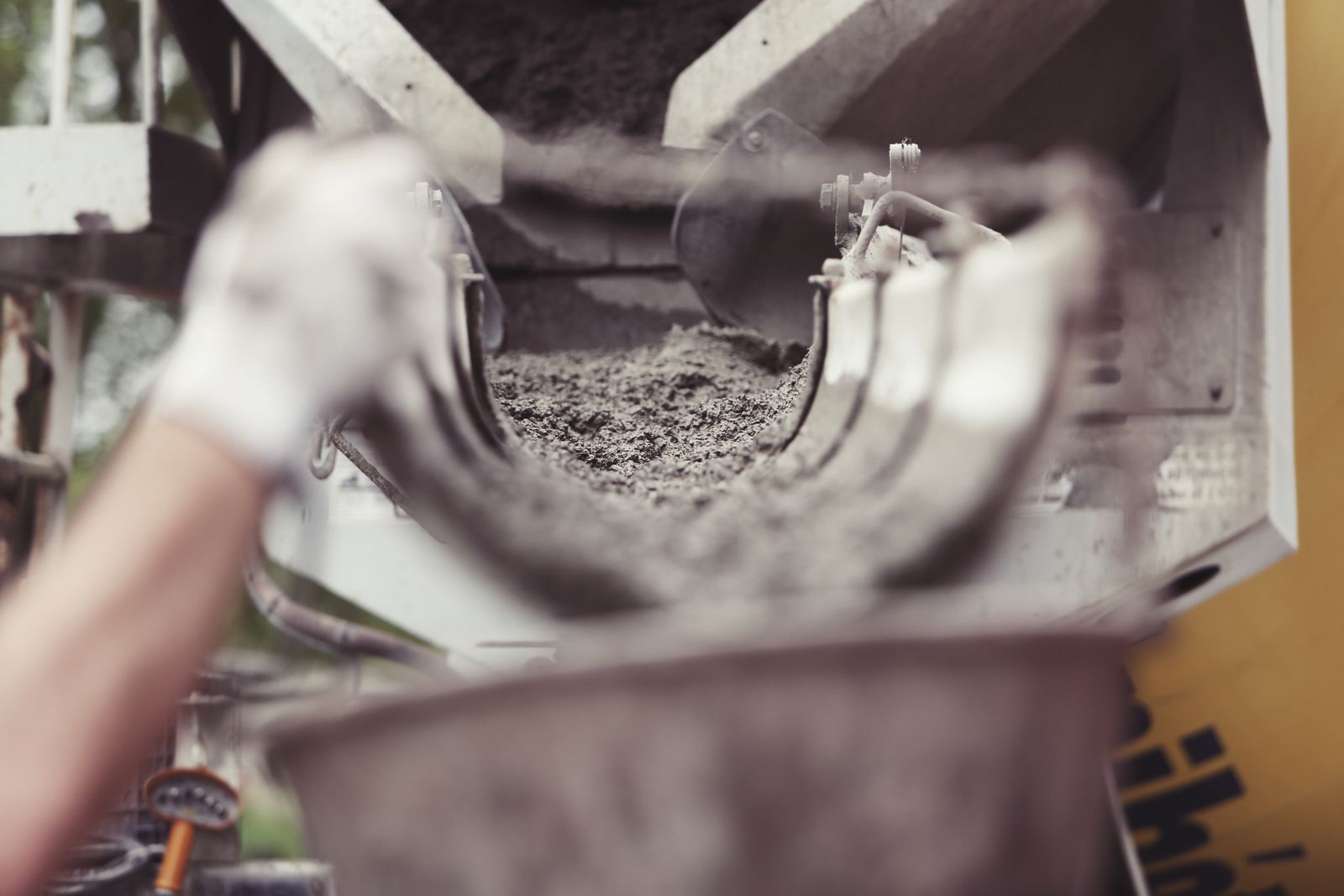
Cement needs only a small amount of water to harden. Extra water is added to make the concrete workable, and when it evaporates it leaves tiny voids. More water, more voids, weaker concrete.
The measure is the water-cement ratio. Structural concrete usually needs a ratio around 0.45 to 0.55. On many sites, water gets added from a hose until the mix flows easily, pushing the ratio well above that. The concrete looks fine and places easily, but it can lose a large part of its strength, crack more as it dries and let water reach the steel sooner.
Which cement should I use?
In Tanzania you will mostly find CEM I (ordinary Portland cement) and CEM II blended cements in strength classes 32.5 and 42.5. The 42.5 classes are generally preferred for structural concrete, and 32.5 for plaster, mortar and blockwork. Blended cements gain strength more slowly, so they need careful curing for longer. Buy from reliable suppliers, check the TBS mark and the manufacture date, and use bags within a few weeks. Our building materials prices guide covers buying and storage.
How do you check the concrete strength?
With cube tests. During each pour, samples are taken and cast into 150 mm steel cube moulds, cured in water and crushed in a laboratory, usually at 7 and 28 days. At 7 days, normal concrete typically reaches around two-thirds of its 28-day strength. If the 7-day results are low, there is time to investigate before more floors go on top.
Ask your contractor to take cubes for every major pour, label them with the date and location, and send them to an independent lab. The cost is small next to the cost of a weak slab.
What other factors affect concrete quality?
- Aggregate: clean, hard, well-graded stone, not dusty or with clay lumps.
- Sand: clean river or crushed sand. Sea sand must be washed, because salt corrodes steel.
- Compaction: a poker vibrator removes trapped air. Poorly compacted concrete has honeycombing and weak spots.
- Cover to steel: enough concrete between the steel and the surface protects it from rust. See our guide to reinforcement steel bars.
- Curing: concrete must be kept moist while it gains strength. See curing concrete in hot weather.
Frequently asked questions
Is 1:2:4 concrete strong enough for a slab?
For a small single-storey building with a proper design, a well-batched 1:2:4 mix (around C20) has been used for decades. Most engineers now specify C25 for reinforced slabs, beams and columns because it gives a better margin and protects the steel better.
How many bags of cement are in one cubic metre of concrete?
Roughly 6.5 to 7 bags of 50 kg for a 1:2:4 mix, and about 8 bags for 1:1.5:3. Designed mixes vary.
What is the strength of concrete after 7 days?
Usually around 65 to 70 per cent of its 28-day strength with ordinary Portland cement, and a little less with blended cements.
Is ready-mix concrete better than site mixing?
For large pours and higher grades, usually yes. It is batched by weight with controlled water. For small pours on a house, careful site mixing can be acceptable if the engineer agrees.
Want the structure done right?
Vika Construction builds to the engineer's specification, with cube tests and supervision at every pour. See our building services or contact us.
Found this useful? Share it with someone who is building.