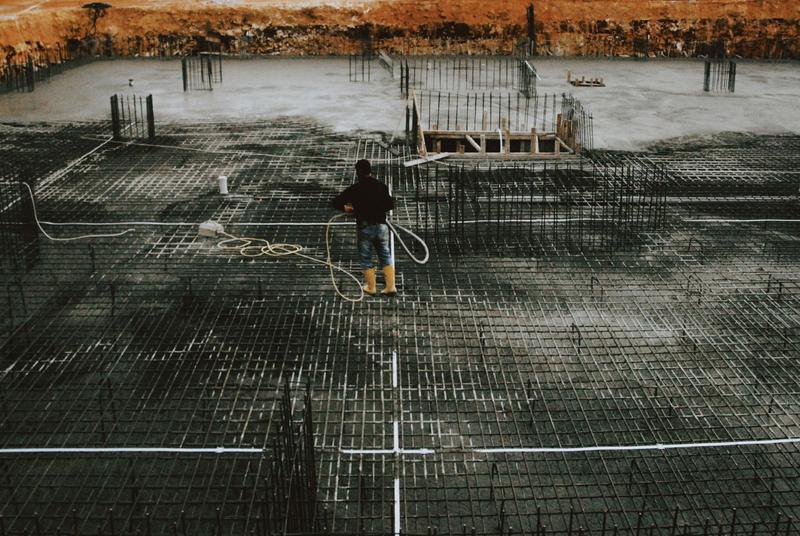
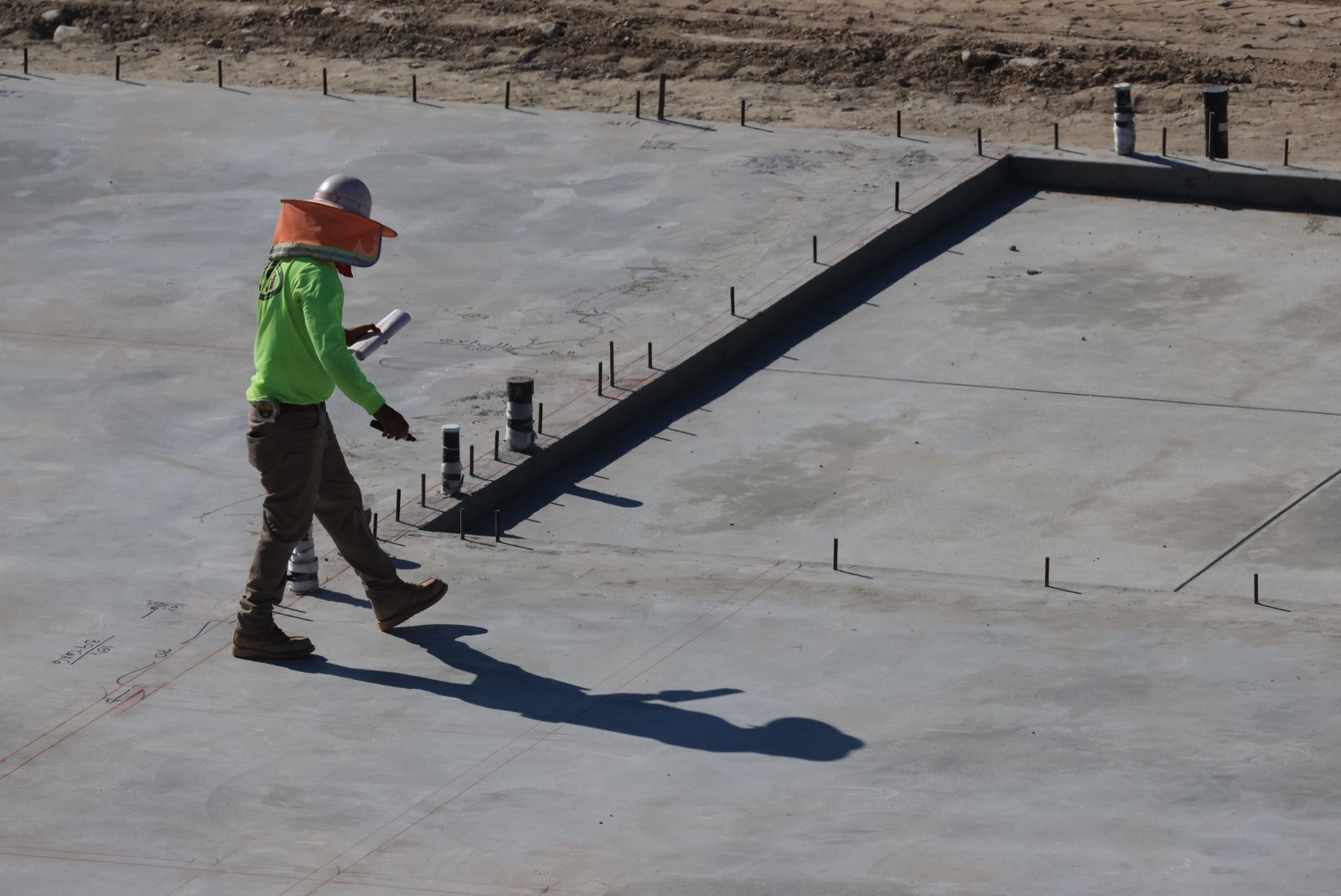
Curing means keeping fresh concrete moist and at a reasonable temperature so the cement can keep reacting and gaining strength. In Tanzania's heat, concrete should be kept continuously wet for at least 7 days with ordinary Portland cement, and 10 to 14 days with the blended cements that are common here. The best methods are ponding water on slabs, covering with wet hessian or sacks, wrapping with plastic sheeting, or spraying a curing compound. Concrete that dries out in the first few days can lose a large share of its potential strength and crack badly, and that loss cannot be recovered later.
Why does concrete need curing?
Concrete hardens through a chemical reaction between cement and water called hydration, not by drying. As long as there is water available, the reaction continues and the concrete gets stronger. If the surface dries out, the reaction slows and stops in the outer layer, which is exactly the part that protects the steel and takes the wear.
In hot, windy or sunny conditions, water evaporates from fresh concrete very quickly. A slab poured at midday in Dodoma or on a breezy rooftop in Dar es Salaam can lose its surface water within hours.
How long should concrete be cured?
| Cement type | Minimum moist curing | Better practice |
|---|---|---|
| CEM I (ordinary Portland cement) | 7 days | 7 to 10 days |
| CEM II blended cements | 10 days | 10 to 14 days |
| Water tanks and retaining structures | 14 days | 14 days or more |
Curing should start as soon as the surface can be wetted without damaging it, usually within a few hours of finishing. Starting the next morning is often too late for the top surface on a hot day.
What are the best curing methods?
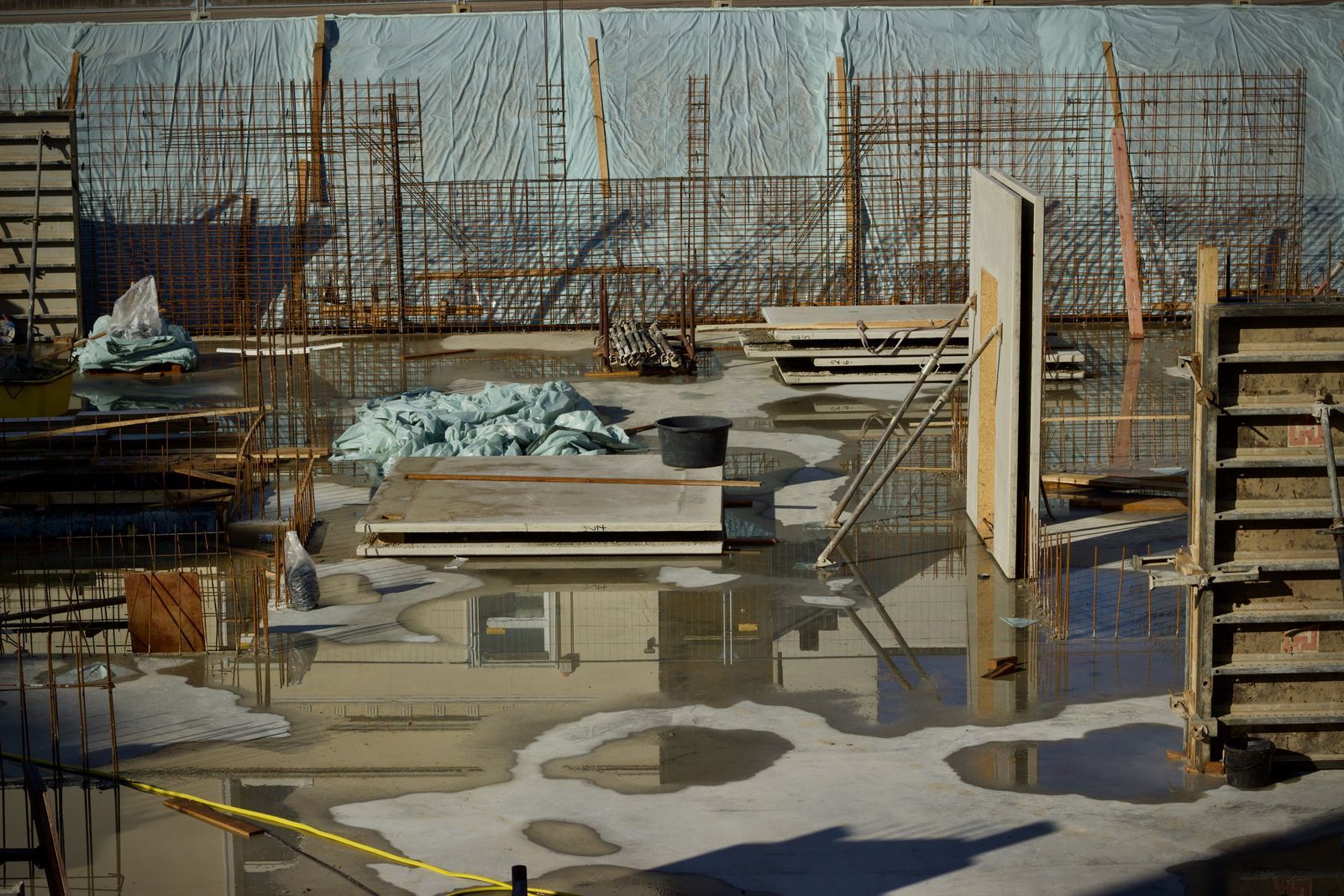
- Ponding: build small sand or mortar bunds around the slab and flood it with a few centimetres of water. Very effective on flat slabs and floors.
- Wet hessian or sacks: cover the surface and keep it soaked. Cheap and widely used, but it only works if someone actually rewets it during the day.
- Plastic sheeting: cover the concrete with polythene, weighted at the edges, to trap moisture. Works well on slabs and wrapped around columns.
- Curing compound: a liquid sprayed on the surface that forms a membrane and slows evaporation. Useful where water is scarce or the area is large. It can affect the bond of later finishes, so check with the engineer first.
- Sprinkling or spraying: keeping the surface wet with regular spraying. Fine if it is continuous. Wetting twice a day and letting it dry in between is not curing.
How do you protect fresh concrete from the heat while pouring?
Curing starts before the pour:
- Pour early in the morning or late in the afternoon, not at midday.
- Shade and wet the aggregate stockpile so it is cooler.
- Keep mixing water in the shade, and add ice if it is very hot and the pour is critical.
- Wet the formwork and the blinding or sub-base so they do not suck water out of the concrete.
- Place, compact and finish without delay.
- Protect the surface from wind and sun straight after finishing.
When can formwork and props be removed?
Formwork should stay long enough for the concrete to carry its own weight and any loads on it. Typical minimum times in warm weather with ordinary cement are:
| Element | Typical minimum time |
|---|---|
| Column and wall sides | 1 to 2 days |
| Beam sides | 2 to 3 days |
| Slab soffit formwork, props left in | 4 to 7 days |
| Slab props removed | 14 to 21 days |
| Beam props removed | 14 to 21 days, longer for long spans |
These are guides only. The engineer decides based on the cement, the span, the weather and the loads above, sometimes using cube test results. Removing props early is one of the main causes of sagging and cracked slabs, especially when blocks and materials for the next floor are stacked on a slab that is only a week old. Our guide to building a storey house covers the sequence for upper floors.
What happens if concrete is not cured?
- Lower strength: the concrete may not reach its design grade, especially at the surface.
- Plastic shrinkage cracks: fine cracks that appear within hours on slabs that dry too fast.
- Dusty, weak surfaces on floors that wear quickly.
- More permeable concrete, which lets water and air reach the steel sooner and shortens the life of the structure.
Concrete grade and cube results only mean something if the concrete in the building was cured like the test cubes, which spend 28 days in a water tank. Our guide on concrete grades explains cube testing.
Frequently asked questions
How many days should I water a concrete slab?
At least 7 days with ordinary Portland cement and 10 to 14 days with blended cement, keeping it wet continuously rather than once or twice a day.
Can I cure concrete with plastic sheeting?
Yes. Polythene laid directly on the surface and weighted at the edges traps moisture well. Check underneath every day and rewet if it looks dry.
Is it bad to pour concrete in the afternoon heat?
It is harder to do well. If you must, cool the materials, wet the formwork, work quickly and start curing as soon as possible. Early morning pours are better.
Can concrete be cured too much?
No. Longer moist curing only helps. The concern is starting late or stopping too early.
Want a structure built with proper site discipline?
Vika Construction pours, cures and tests concrete to the engineer's specification on every project. See our building services or contact us.
Found this useful? Share it with someone who is building.