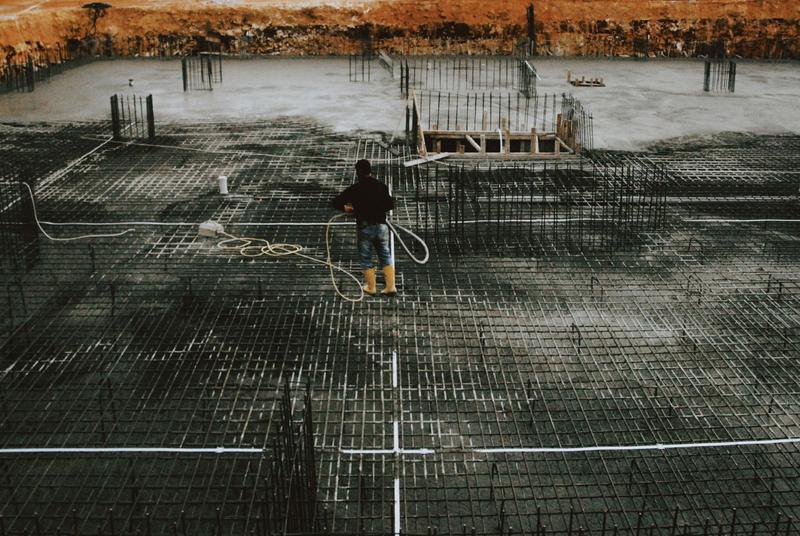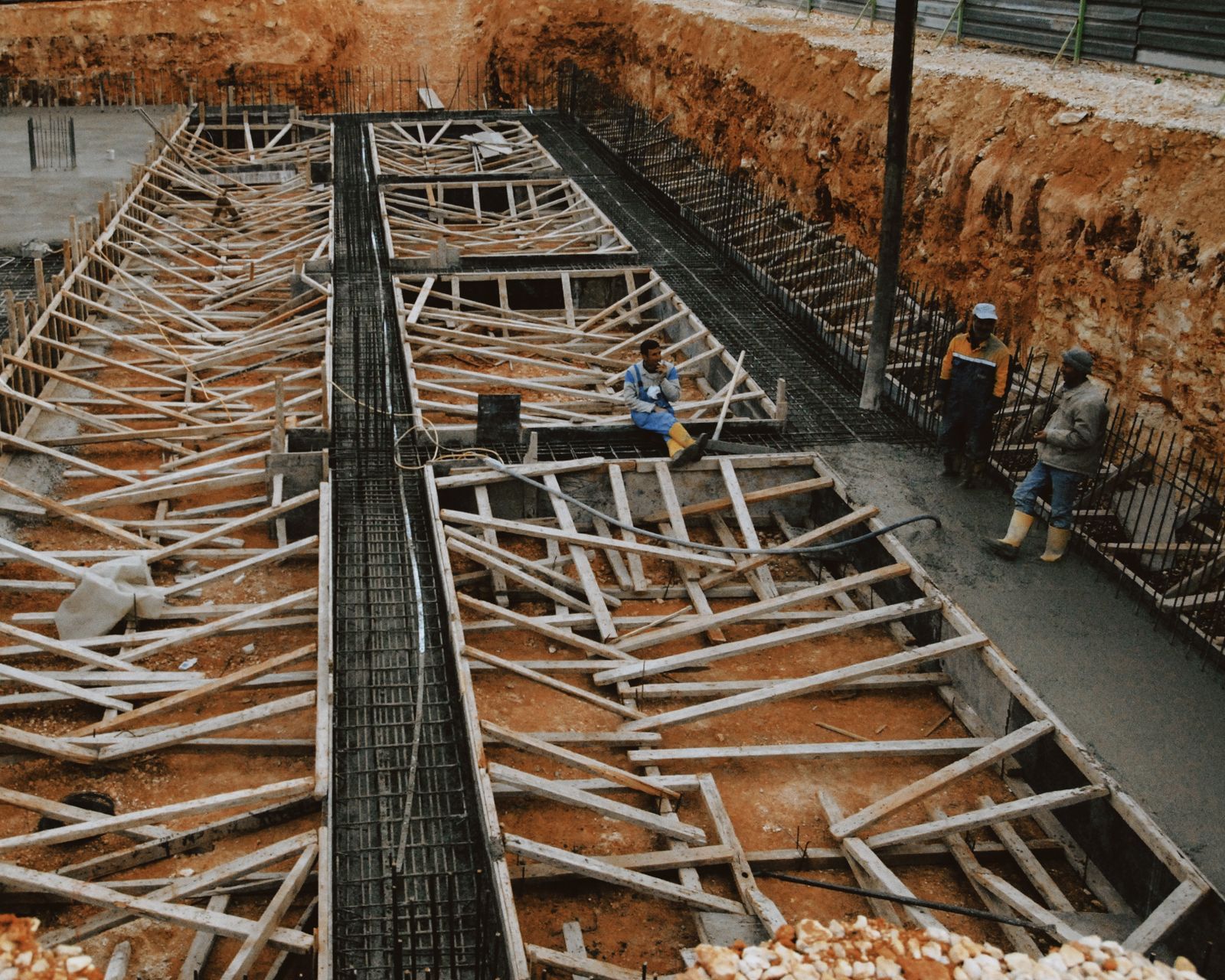
The main foundation types used for houses in Tanzania are strip foundations (the most common for bungalows on firm soil), raft foundations (a reinforced slab under the whole house, used on weak or expansive soil such as black cotton soil), pad foundations (separate bases under columns, common for framed and storey buildings) and piles (deep foundations for very poor ground or heavy buildings). The right choice depends on the soil, the building's weight and the water table, and should be decided by a structural engineer, ideally after a soil test.
What are the main foundation types?
| Foundation | How it works | Typical use in Tanzania |
|---|---|---|
| Strip | A continuous concrete strip under load-bearing walls | Bungalows on firm soil |
| Raft | A thick reinforced slab spreading the load over the whole footprint | Black cotton soil, weak soil, high water table |
| Pad | Separate concrete pads under columns, linked by ground beams | Framed buildings, storey houses, commercial |
| Pile | Columns of concrete driven or bored deep to firm ground | Very poor soil, heavy or tall buildings |
When is a strip foundation enough?
A strip foundation suits single-storey houses on firm, stable soil, such as many sandy or gravelly sites. It is the cheapest option and simple to build. It is not suitable on expansive clay, loose fill or where the plot floods often, unless an engineer adapts the design.
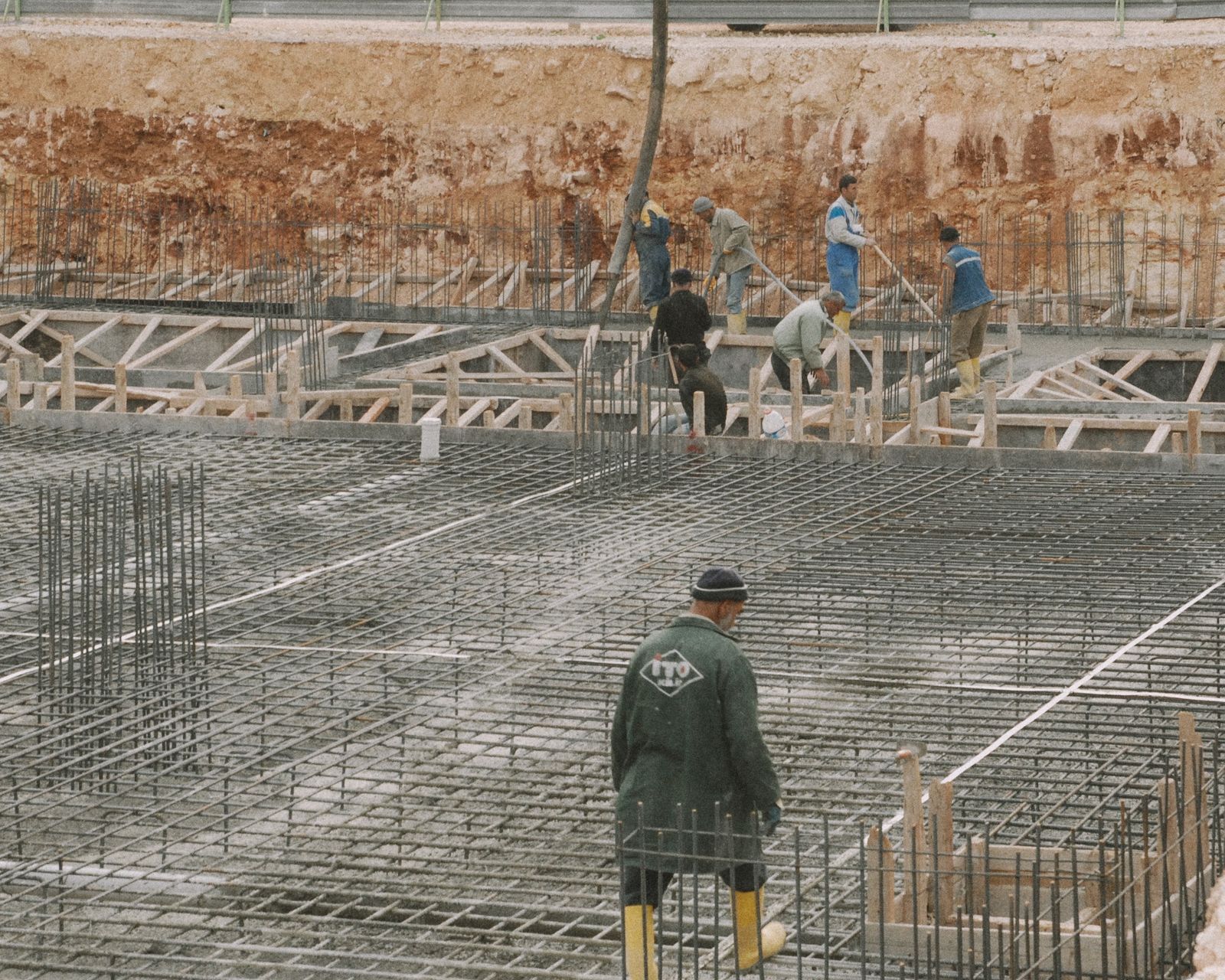
Why are raft foundations used on black cotton soil?
Black cotton soil swells when wet and shrinks when dry, which cracks walls on strip foundations. A raft spreads the load and moves as one unit, reducing differential movement. Often the expansive soil is also partly removed and replaced with compacted good material. Read our full guide to black cotton soil foundation problems.
When do you need pad foundations or piles?
- Pad foundations are used when the building has a reinforced concrete frame (columns and beams), as in most storey houses, apartments and commercial buildings.
- Piles are used when firm ground is deep, for heavy buildings, or near the coast and rivers where soil is soft.
Do you need a soil test?
For a simple bungalow on known good ground, an experienced engineer may decide from a site inspection and trial pits. For storey houses, apartments, commercial buildings, slopes or any site with clay, fill or high water, a geotechnical investigation is strongly recommended. It costs little compared with repairing a failed foundation.
How deep should a house foundation be?
For strip foundations on firm soil, a depth of about 0.9 to 1.2 metres is common in Tanzania, but this is set by the soil, not by habit. On expansive clay or fill, foundations may need to go deeper or use a raft.
How much do foundations cost in Tanzania?
| Foundation | Example share of building cost |
|---|---|
| Strip, firm soil | 8% to 12% |
| Raft, black cotton soil | 15% to 22% |
| Pad and ground beams, storey house | 12% to 18% |
| Piles | Priced by design, often much higher |
For a typical 3-bedroom house costing TSh 120 million (about USD 46,000), the foundation might cost about TSh 10 million to 25 million (about USD 3,850 to 9,600) depending on the type. Example figures only. USD figures are approximate, using roughly TSh 2,600 per USD.
How do you protect a foundation from water?
- Set the floor level well above the ground and road.
- Add a damp proof course and a waterproof plinth; see waterproofing guide.
- Build a concrete apron and proper stormwater drainage.
- Keep trees and soak pits away from the foundation.
Frequently asked questions
What is the best foundation for a house in Tanzania?
There is no single best type. Strip foundations suit firm soil and bungalows; rafts suit expansive or weak soil; pads suit framed and storey buildings.
Can I build a storey house on a strip foundation?
Usually not without an engineer's design. Storey houses normally need pad foundations with a frame, or a strong raft.
How much does a soil test cost?
For a house, often a few hundred thousand to a few million shillings, depending on the number of tests. It is usually worth it.
Why is my new house cracking?
Common causes are foundation movement on clay, poor compaction, water near the walls or weak concrete. Ask an engineer to inspect.
Get the right foundation for your plot
Vika Construction designs and builds foundations for homes, offices and public buildings across Tanzania. Contact us for a site assessment.
Found this useful? Share it with someone who is building.