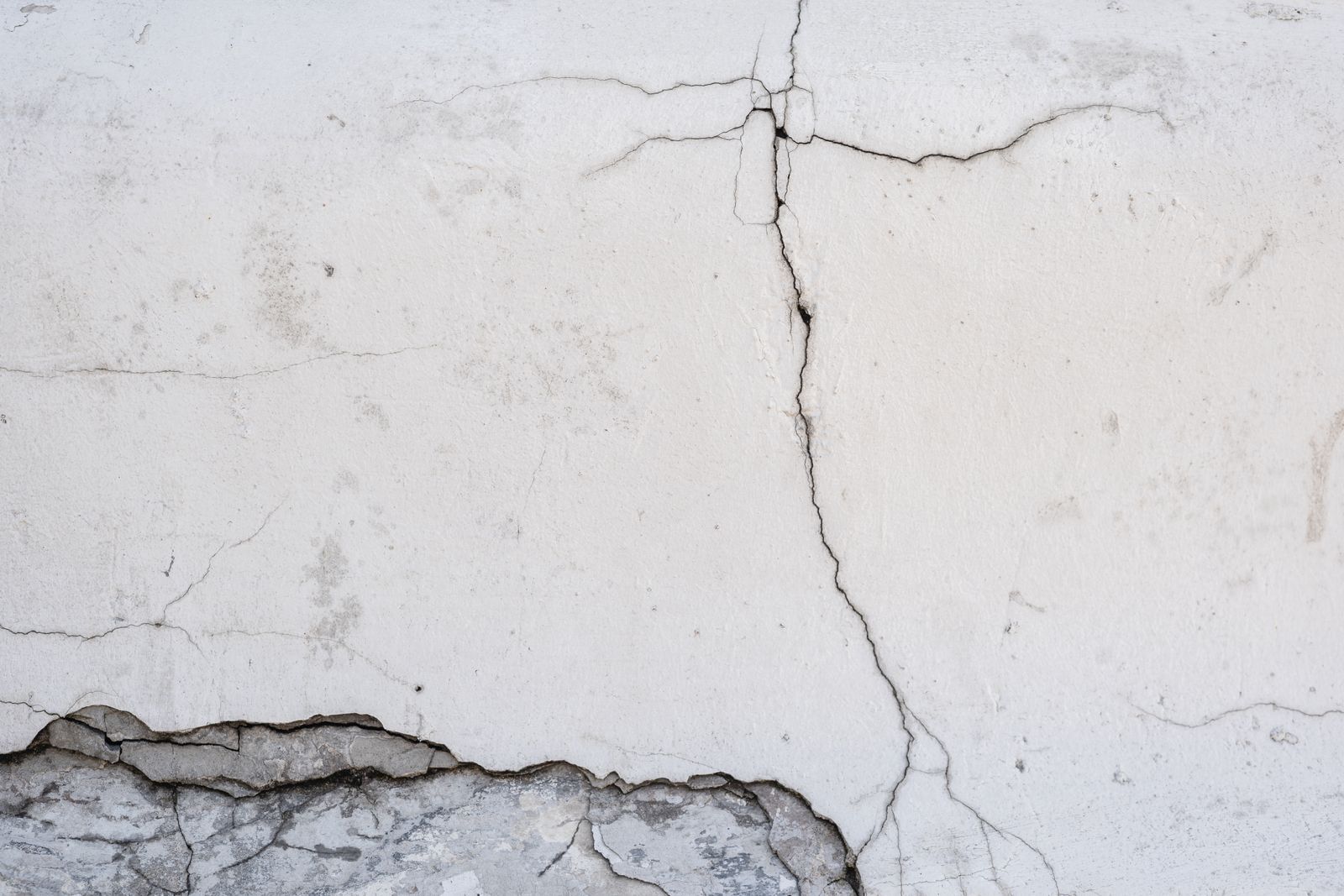
Most cracks in walls are not dangerous. Fine hairline cracks under about 1 mm, especially in plaster, usually come from shrinkage as the plaster dries and can be filled and painted. Cracks become a concern when they are wider than about 3 to 5 mm, keep growing, run diagonally from the corners of doors and windows, step through the blockwork, or appear with doors that stick and floors that slope. Those patterns point to movement in the foundation or the structure and need an engineer to find the cause before anything is repaired. Patching a moving crack only hides it until it opens again.
How do I judge how serious a crack is?
Width is the simplest guide. Use a crack width gauge, a feeler gauge, or even a set of coins for a rough check.
| Crack width | Typical category | What it usually means |
|---|---|---|
| Up to 0.1 mm | Hairline | Plaster or paint shrinkage, cosmetic |
| 0.1 to 1 mm | Fine | Shrinkage or minor movement, fill and redecorate |
| 1 to 5 mm | Moderate | Some movement, find the cause, repair and monitor |
| 5 to 15 mm | Severe | Significant movement, engineer needed |
| Over 15 mm, or out of line | Very severe | Possible structural damage, get advice quickly |
Width is not the whole story. A 2 mm crack that was 1 mm last month is more worrying than a 3 mm crack that has not changed in five years.
What do different crack patterns mean?
- Fine random "map" cracks in plaster: plaster mixed too rich, applied too thick, or dried too fast. Cosmetic.
- Vertical crack where a wall meets a column: blockwork and concrete move differently and were not tied together. Usually not structural, but it lets water in.
- Horizontal crack just below the roof slab or ring beam: the slab expands and contracts in the heat and pulls on the wall. Common on flat roofs in Tanzania.
- Diagonal cracks from the corners of windows and doors: stress concentrates at openings, often because of foundation movement or a missing lintel.
- Stepped cracks following the mortar joints: typical of differential settlement, where one part of the building sinks more than another.
- Cracks that are wider at the top than the bottom (or the reverse): a sign that part of the foundation is moving.
- Cracks in concrete beams or columns with rust stains: the steel inside is corroding. Needs attention.

What causes structural cracks in Tanzanian houses?
- Expansive soil: black cotton soil swells in the rains and shrinks in the dry season, lifting and dropping parts of the foundation. Cracks often open and close with the seasons. See black cotton soil foundation problems.
- Weak or uneven foundations: footings too small, too shallow, or partly on fill.
- Water near the foundations: leaking pipes, soak pits or rainwater discharging next to the walls soften the ground.
- Trees close to the house: roots draw moisture out of clay soils in the dry season.
- Missing or short lintels over doors and windows.
- Heavy loads added later: an extra storey or a water tank on a structure not designed for it.
- Poor-quality concrete or underweight steel in beams and slabs.
How do you monitor a crack?
Before deciding on a repair, find out whether the crack is still moving:
- Draw a pencil line across the crack and a short line at each end, with the date.
- Measure the width at marked points and photograph it with a ruler in the picture.
- Better, fix a crack monitor (tell-tale) across it. These have two plastic plates with a scale that shows movement in millimetres.
- Record readings every few weeks, through at least one change of season.
If the crack is stable, it can be repaired. If it is growing, the cause must be fixed first.
How are cracks repaired?
The repair depends on the cause:
- Plaster cracks: rake out, fill with a flexible filler, and repaint. For recurring cracks, embed a strip of fibreglass mesh in the new plaster.
- Wall to column joints: fix wall ties or mesh across the joint during repair, then replaster with mesh.
- Cracks in blockwork from old, stopped movement: rake out and repoint, or stitch the wall with stainless steel helical bars set into the mortar joints across the crack.
- Cracks under the roof slab: often treated by creating a deliberate movement joint with a flexible sealant, because the slab will keep moving with temperature.
- Foundation movement: improve drainage around the house, move soak pits and downpipe outlets away, remove trees that are too close, and in serious cases strengthen the foundation (underpinning) as designed by an engineer.
- Cracked concrete with rusting steel: break out the damaged concrete, clean or replace the steel, treat it, and rebuild with repair mortar.
Our guide on house renovation costs gives example prices for plaster and structural repairs.
When should I call an engineer?
Call one if you see any of these:
- Cracks wider than about 3 to 5 mm.
- Cracks that keep growing.
- Diagonal or stepped cracks around several openings.
- Doors and windows that start sticking.
- Floors that slope or crack.
- Cracks in beams, columns or slabs.
- Rust stains or spalling concrete.
A structural engineer can identify the cause, tell you whether the building is safe in the meantime and specify the repair.
Frequently asked questions
Are hairline cracks in new plaster normal?
Yes. New plaster often develops fine shrinkage cracks in the first months, especially in hot weather. Fill them before final painting.
Why do cracks appear at the corners of windows?
Stress concentrates at corners of openings. Small cracks can come from shrinkage, but wide diagonal ones usually mean foundation movement or a problem with the lintel.
Can I just fill cracks and paint over them?
Only if the crack has stopped moving. A moving crack will reopen, so monitor it first and fix the cause.
Are cracks in a new house covered by the contractor?
Defects that appear during the defects liability period in your contract, often 6 or 12 months, should be repaired by the contractor. See our construction contract checklist.
Worried about cracks in your building?
Vika Construction inspects cracked buildings and carries out structural and plaster repairs. See our renovation services or contact us.
Found this useful? Share it with someone who is building.